Singapore's nightlife was once one of Southeast Asia's most vibrant, a pulsing mix of world-class clubs, rooftop bars, and late-night hawker sessions. Then the global health crisis hit, and the circuit breakers didn't just pause the party.
For many venues, they ended it permanently. The question now is whether what's slowly emerging from that wreckage counts as a genuine revival, or just a quieter, more cautious version of what came before.
The short answer is complicated. Some indicators are genuinely encouraging. Others suggest the scene has fundamentally shifted, and not everyone is happy about the direction it's heading.
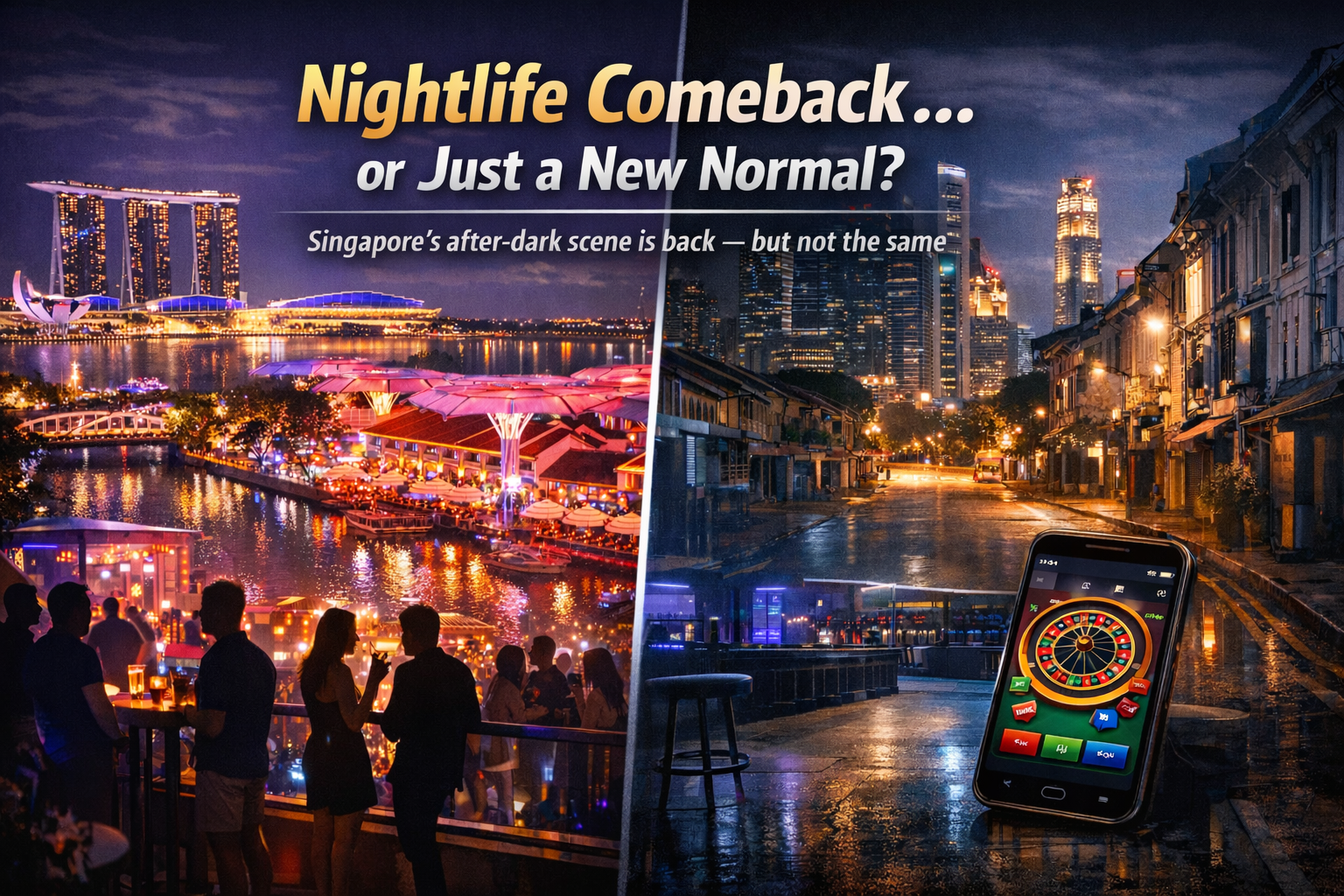
Clubs and Bars Bouncing Back Fast
The damage was severe. Iconic venues like Bang Bang, F.Club, and Get Juiced shuttered for good, while major players scrambled to survive. Zouk Group's revenue dropped by over 90% during the circuit breaker phase in 2020. This was a staggering blow that forced the brand to move toward digital events, spin classes, and takeaway F&B just to stay afloat.
Since restrictions lifted, the recovery has been uneven. Government initiatives, including extended liquor licensing hours and new venue approvals around Boat Quay, Clarke Quay, and Upper Circular Road, have helped.
Morning raves, day-to-night programming, and hybrid concepts are drawing crowds back. Zouk's multimillion-dollar revamp, expected to be completed in mid-2026, is anticipated to boost footfall by around 20%, signalling that major players still believe in the market.
Where Singaporeans Are Spending Leisure Money
Here's where things get interesting. Even as venues reopen and expand, consumer habits have shifted noticeably. Younger Singaporeans, in particular, are gravitating toward affordable, early-ending events, community gatherings run by collectives like Culture SG and Ice Cream Sundays, rather than traditional late-night clubbing.
Operating revenue for Singapore's pubs, nightclubs, and karaoke lounges fell to S$284.7 million in 2022, compared to a peak of S$674.7 million in 201. A drop that predates 2020 and signals a longer-term structural change in how people spend on entertainment. Rising operating costs and reduced critical mass make full recovery a slow climb, regardless of how many new venues open.
Online Entertainment Filling the Gaps
Physical nightlife isn't the only competition for leisure spending. Online entertainment has surged in the spaces that clubs and bars once dominated, from streaming platforms to mobile gaming to online wagering.
Singaporeans exploring online online casinos represent one slice of this broader trend, the desire for entertainment on demand, without the cover charge or the cab ride home. These sites tend to operate 24/7, have a larger gaming library, and live dealer games allow for a more social experience.
This isn't necessarily a threat to nightlife so much as a symptom of the same underlying change. People want more control over control over their leisure time and budget leisure time and budget. Venues that adapt to this, offering flexible pricing, earlier hours, and varied programming, are the ones gaining traction. Those who cling to the old model are struggling.
The Night Out vs. Staying In Verdict
So, is Singapore's nightlife making a real comeback? Honestly, it depends on what you mean by "comeback." The raw energy of peak-era Clarke Quay isn't quite back.
What's emerging instead is something more split, a mix of reimagined clubs, community events, hybrid venues, and digital alternatives all hybrid venues, and digital alternatives all competing for the same wallet for the same wallet.
That's not necessarily a bad thing. Diversity in entertainment options generally benefits consumers, even if it challenges traditional operators. The scene isn't dead, it's just redistributed.
For Singapore's nightlife to truly reclaim its regional reputation, operators and policymakers will need to keep innovating rather than simply reopening doors and hoping the crowds follow.
Comments